Andrew Ballantyne – The Trial part 5 – Resolis Riots
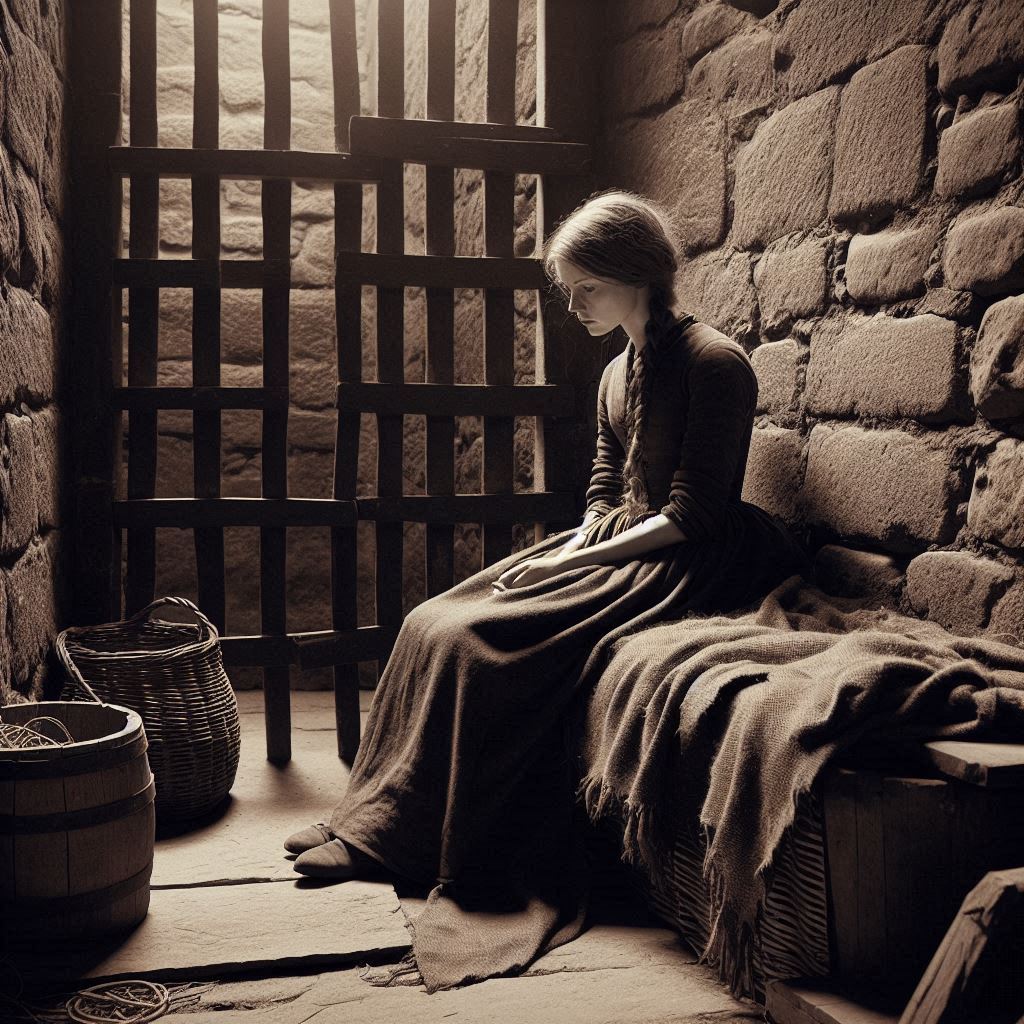
Andrew Ballantyne was imprisoned in Dingwall Courthouse and Jail after his arrest in June 1844. This was a new building that had already been put to use in 1843 following the Resolis Riots. Some of the rioters were imprisoned there.
It is interesting to note how differently Andrew and the rioters were treated. Andrew received a seven year transportation sentence for taking a little horse. Many of the rioters were set free. Only one man was given a nine month’s imprisonment after being sentenced in the High Court in Edinburgh in June 1844. The jury asked for leniency.
The Resolis Riots took place on Thursday 28 September 1843 at the church in Resolis, Easter Ross. 1843 was a year of turbulence in Scotland. Almost 40% of congregations in the Church of Scotland had seceded to the Free Kirk of Scotland. This turmoil stemmed from the Westminster government re-establishing the rights of patronage in 1712.
In 1834, the General Assembly of the Church of Scotland vetoed this act. Once again, congregations were allowed to select their own minister. The Court of Session in London and the House of Lords said this veto was against the law. Viscount Melbourne was the Whig Prime Minister at that time. He caused more outrage in Scotland by refusing to allow government money to be spent on new churches in Scotland.
At the General Assembly of the Church of Scotland in Edinburgh in 1843, Thomas Chalmers led the Free Kirkers ‘out.’ In Resolis, almost the whole congrgation along with their minister, Rev. Donald Sage, also left their church.
In Resolis, the congregation had objected strongly when the landlords chose to appoint the Rev. John Mackenzie. On September 28th 1843, the day of his induction, a crowd gathered at the church and stood with stones and sticks. They had been called there by a small group of men and boys who had climbed a ladder at the gable-end of the church and rang the bell. Women arrived and gathered stones which they held in their aprons. The men gathered sticks. They waited for the arrival of the Establishment. This included landowners, provosts, sheriff officers, the prosecutor fiscal, and several justices of the peace.
Sheriff Clerk, John Taylor, shouted at the people to go home. A woman named Eppy Aird called back, ‘If you try and put in that minister we’ll find a use for these.’ She had an apron full of stones. Reinforcements arrived on both sides. As the crowd moved forward, the Establishment retreated to the church manse under a hail of stones.
The crowd chanted, ‘Moderates,’ This was an insult as it described the people within the Church of Scotland who were seen as too cosy with the government in Westminster. The crowd felt these people were too ready to compromise religious principles for the sake of politics.
Eventually, Margaret Cameron got too close and she was grabbed in her attempt to throw stones. It was eventually agreed that the Rev. McKenzie’s induction should be postponed. Margaret Cameron was taken to Cromarty jail.
The next day, the people of Resolis were not happy that Margaret remained in jail. By that afternoon, a crowd gathered outside. A group of men out celebrating an upcoming wedding, mixed with the crowd. Being worse for the wear, one man called out, ‘We must have her out!’ Another shouted, ‘Bring her out and you’ll get a dance at my wedding!’
The crowd were urged on and began to throw stones. They eventually broke down the main door to the courthouse and jail. Once in the courtroom, they used a heavy bench to break down a further two doors and rescue Margaret.
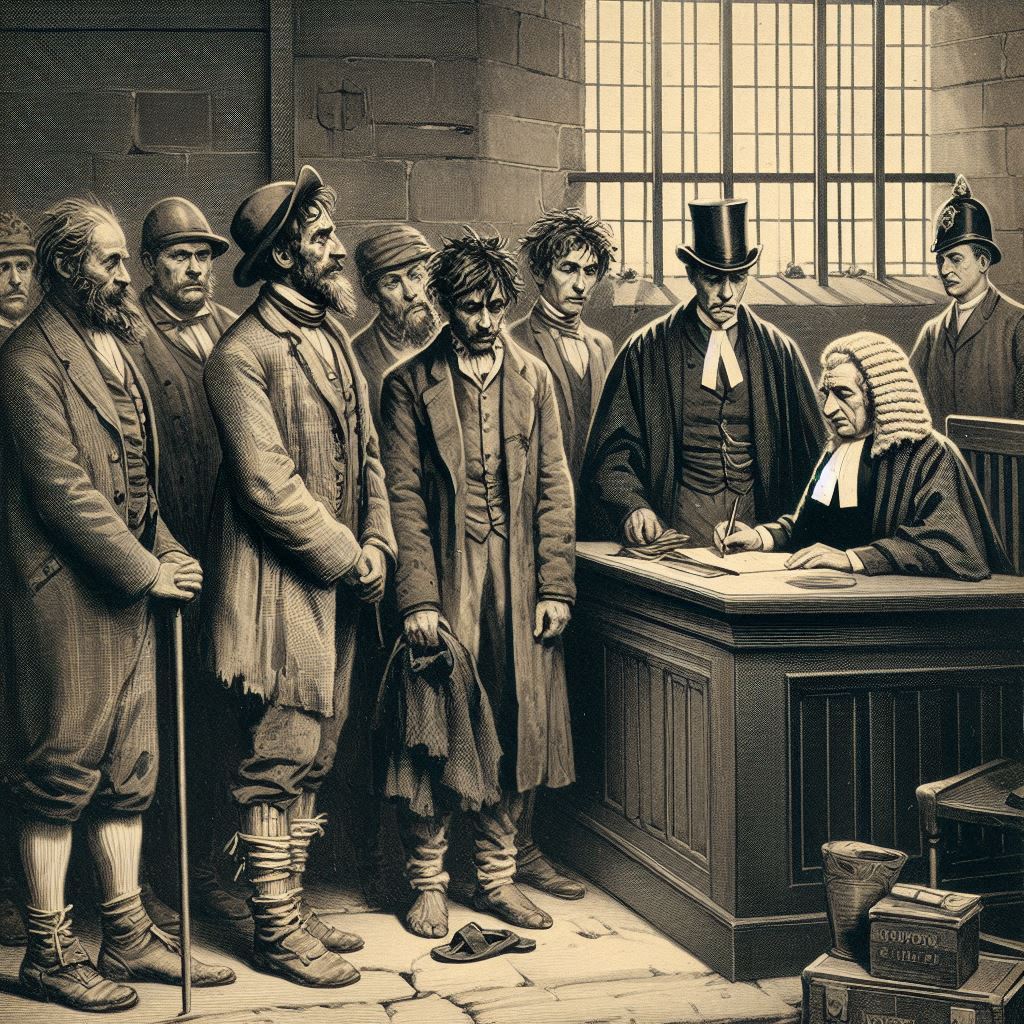
Meanwhile, the authorities noted down the names of those involved. Many of the ‘rioters’ evaded capture until early November. When they were arrested, they were taken to the newly-opened Dingwall jail. In January 1844, eleven men and one woman were charged at Edinburgh High Court. One man was sentenced to nine months imprisonment.
It is interesting to observe that most of those held in Dingwall were freed without charge. It seems strange that after such an uprising against the authorities, such leniency was given to the perpetrators. Andrew Ballantyne faced accusations in the same place regarding the dubious theft of a horse. He was dealt with much more harshly.
At Andrew’s trial, Ann McRae, the elder sister, was also called upon to provide a statement about the mare. This is what she said:
“I know that my father’s horse was taken out of the stable between Friday night and Saturday morning last. I did not see it put into the stable on Friday night, but on Saturday morning I saw the stable door open and the stable empty.
The mare was brought back this morning by a sheriff’s officer. I saw it and knew it to be my father’s. My father is bed ridden. I did not see Andrew Ballantyne last week.
All which is truth. I cannot write.” Ann McRae
Perhaps the authorities were worried about further riots if the people of Resolis were treated harshly. The government wanted stability across the British Isles. It might have been easier to let the people go without taking further action.
Andrew was not so lucky.
Discover more from Discovering My Family
Subscribe to get the latest posts sent to your email.




 Discovering My Family