The trial was well on its way. There didn’t seem to be much hope for Andrew after listening to the witnesses. He also had to face a jury of fifteen men. This must have been very intimidating. In this post I’ve tried to discover a little about these men. Who were they and why were they on the jury?
From the records: Andrew Ballantyne, present, prisoner in the prison at Dingwall.
Indicted and accused at the instance of Her Majesty’s Advocate for Her Majesty’s interest of the crime of Horse Stealing as set forth in the libel.
The next statement explains that Andrew’s case was heard in front of a panel and advocate depute, Mr A. Forbes Irvine. The original document is difficult to read. I’ve included everything I can understand.
The Lords find the libel relevant to infer the pains of law, but allow the panel a proof in exculpation (to clear from a charge of guilt or fault; free from blame; vindicate) and (remit?) the panel, with the libel, (unknown words).
The panel was made up from fifteen men. They were eligible to sit in judgement by owning property to at least the value of £10.
The following Jurors were then chosen by Ballot to serve upon the Assign of the Pannel.
John McTavish, Bank Agent, Inverness
Donald Stewart, Merchant, Dingwall
William Grant, Accountant, Elgin
Oneas Mackintosh, (unknown word) of Raigmore
George May, residing at Clachnaharry
John Mackenzie junior, farmer, Balvaddie
Donald Ross, Clothier, Nairn
Lewis MacBean, Merchant Tailor, Kingussie
William Downie, Merchant, Forres
James Stewart, residing at C………kyle
Alexander Winchester, Cooper, Inverness
Donald Cameron, Innkeeper, Caledonian Hotel, Fort William
William Norris, T….man, of Ullinish?
James Macphail, Merchant, Aule…..
Harry Mackenzie, Tacksman? of Easter P
–who were accordingly all lawfully sworn.
Some research on the above jurors gives a little more information about these men who had such power over Andrew’s life. They came from a range towns around Inverness and had a variety of occupations.
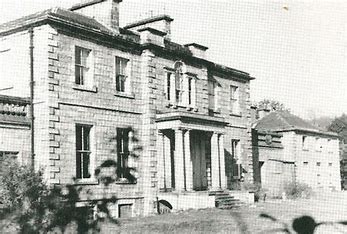
Oneas Mackintosh of Raigmore.
Raigmaore is now the name of a hospital in Inverness. Census information shows records for an Aeneas Mackintosh but not enough evidence to be certain that this is the same person as the man on the jury. However, further research on Raigmore gives the following information:
The house was designed by Archibald Simpson[1] and constructed for Lachlan Mackintosh of Raigmore, a merchant who had returned from Calcutta,[2] in about 1810.[3] On Lachlan Mackintosh’s death in 1845, the estate passed to Aeneas Mackintosh, his son.
It goes on to say that Raigmore Hospital was built on part of the estate.
2. John McTavish in 1841 he was thirty-five years old. He lived at 28, Rose St, Inverness. He was a Bank Agent and married to Christina. They had two children, Christina and Alexander. There were two female servants in the house.
What was Rose St., Inverness, Scotland like in 1844?
Rose Street Foundry, Inverness
In 1844, Rose Street in Inverness was home to the Rose Street Foundry, an industrial facility established in the 1830s. The foundry was initially the property of the Inverness Iron Company. It later became part of the Northern Agricultural Implement and Foundry Company Limited. The area around Rose Street was likely bustling with industrial activity. The foundry produced agricultural implements and worked on contracts for the Highland Railway.
The foundry played a significant role in the local economy, providing employment and contributing to the industrial development of Inverness. The street itself would have been a mix of industrial buildings and possibly some residential areas for workers and their families. The presence of the foundry and other industrial activities would have made Rose Street a lively and important part of Inverness during that time.
3. Donald Stewart – In 1851 he was aged sixty-two. He was born in Fodderty and lived in the High Street in Dingwall. He was a draper and was married to Anne. He had one son who was still at home – William aged forty-six years. He is a draper’s clerk. A servant lives with them.
High Street, Dingwall
4. William Grant – In 1841 he was living in Elgin and was an accountant. He was aged fifty years and was single. He lived in a boarding house with two other professional men, his landlady and a female servant.
Elgin
5. George May – In 1841 he was thirty-five years. He lived at Clachnaharry with his mother, Ann. He was a civil engineer. Four other siblings were also living at home.
Clachnaharry
6. Donald Ross – In 1851 he was thirty-two years. He lived at 90, High Street, Nairn. He lived with his father, John, a pensioner from the army, and his mother Isabella. Also living there were his three siblings. Margaret and Georgina worked from home and Alexander, aged twelve years was a draper’s apprentice.
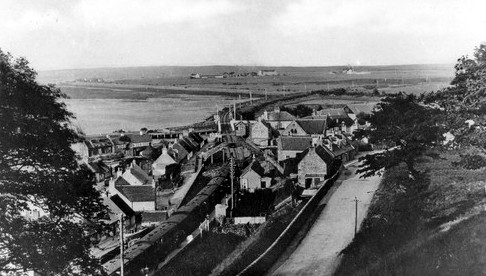
High Street, Nairn
7. William Downie – In 1851 he was aged forty-five years. He lived with his mother, Ann, at 316, High Street, Forres. He was a spirit dealer.
Discover more from Discovering My Family
Subscribe to get the latest posts sent to your email.





 Discovering My Family