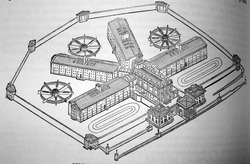
Andrew was eventually relocated from Millbank to the new prison of Pentonville, opened in 1840. Prisoners were initially kept in isolation in cells measuring 4m x 2m wide. Each cell had a water closet, but these were often blocked. Prisoners used the pipes connecting their cells to communicate with each other. It cost 15/- a week to keep a prisoner at Pentonville.

Andrew would soon discover that prisoners were forbidden to speak to each other. Even when exercising, they could not speak. Exercise was carried out in rows with the prisoners wearing brown cloth masks. Each man had to attend chapel. Even there, they sat in cubicles with their heads visible to the warders but not to each other. Unsurprisingly, mental illness and suicide was common. Each prisoner was made to work from six in the morning until seven in the evening.
Daily Food Rations
Breakfast – 10oz bread and 3/4 pint cocoa
Dinner – 1/2 pint soup or 4oz meat, 5oz bread and 1lb potatoes
Supper – 1 pint gruel (a thin porridge) and 5oz bread

The process of character reformation at Pentonville was an extreme form of the Separate System. Convicts were isolated for eighteen months. There was a much stricter application of the rules of non-communication between prisoners. The masks worn during exercise ensured prisoners could not even communicate by facial expression. It soon became clear that this strict system was not working. A high proportion of prisoners became ‘insane’. Many who survived and were shipped out to Australia had their spirits broken. They had little to contribute to the colony. Andrew Ballantyne must have had a strong character to survive this ordeal for two years.
Discover more from Discovering My Family
Subscribe to get the latest posts sent to your email.

 Discovering My Family