Andrew Ballantyne – Survival in Victorian London Prisons – part 14
Millbank Prison
In earlier posts, I told the story of Andrew Ballantyne and the events that changed his life forever.
Andrew was arrested for stealing and trying to sell a small brown horse. He was tried by a jury of fifteen men in Dingwall in 1844. He was given ‘a seven-year transportation to a land beyond the seas’ sentence. This began his journey to Australia.
Prison Hulk
At this time, the Colonies had stopped accepting prisoners. Now only fit men under the age of thirty-five would be accepted. These men also had to prove their character had been rehabilitated. They had to be judged to no longer lead a life of crime. Other prisoners, too old or ill, were sent to prison ‘hulks.’ These were moored in the Thames. This was a death sentence.
Reception area at Millbank Prison
Andrew was first taken to Millbank Prison in Westminster, London. In contemporary descriptions of this prison clearly show how terrible life must have been for this nineteen-year-old Highland lad.
Men and women of all ages were received there. the prison being the depot for “convicts” of every description. When a person was convicted and sentenced, they either faced transportation or penal servitude. They stayed in the prison where they were confined before trial. The prisoner would remain there until the Secretary of State approves their removal. At this point, the prisoner was transferred to Milbank Prison. His “caption papers” were included. These papers give the nature of his offence, the date of his conviction, and the length of his sentence. After a time, the prisoner was removed to a“probationary” prison. Here, they would undergo a certain term of separate confinement.
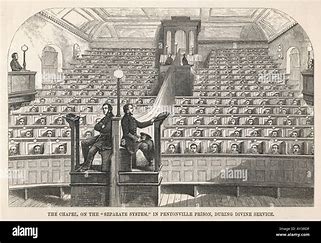
Pentonville Prison
Andrew was sent to Pentonville. After another period of ‘rehabilitation’ a prisoner might be taken to an establishment outside of London. This may have been public works either at Portland, Portsmouth, or the Hulks. Other prisoners were transported to Gibraltar, Bermuda, or Australia, where they would remain until the completion of their sentence.
Reception
When the prisoners arrived at Millbank, they were informed they would have a medical examination by the surgeon. When the prisoners were pronounced free from contagious disease, they are placed in the reception ward. Afterwards they were distributed throughout the prison according to circumstances. This same process of examination and bathing also took place at Pentonville.
If a prisoner passed this medical examination, they would be allowed to associate with other prisoners. If not, they were confined to a separate cell.
On entering his cell, each prisoner’s hair was cut, and the rules of the prison were read over to him. The latter process was repeated every week, and the hair cut as often as required.
During his time in Millbank Prison, Andrew would have experienced a diet of hard work and religious instruction. The prison made clothing and footwear for other prisons and institutions in other parts of London. Prisoners were given training in tailoring while others made shoes or were weavers. Andrew learned shoe making. He would work twelve hours a day, six days a week.
Throughout Andrew’s story, not excusing his poor decision about the horse, he shows resilience. He survived such hardship at such a young age. He faced a trial, transportation from Dingwall to London, imprisonment in Millbank, a transfer to Pentonville, and transportation to Australia. He then made a successful life for himself and his family in Australia. Quite incredible.
Discover more from Discovering My Family
Subscribe to get the latest posts sent to your email.



 Discovering My Family