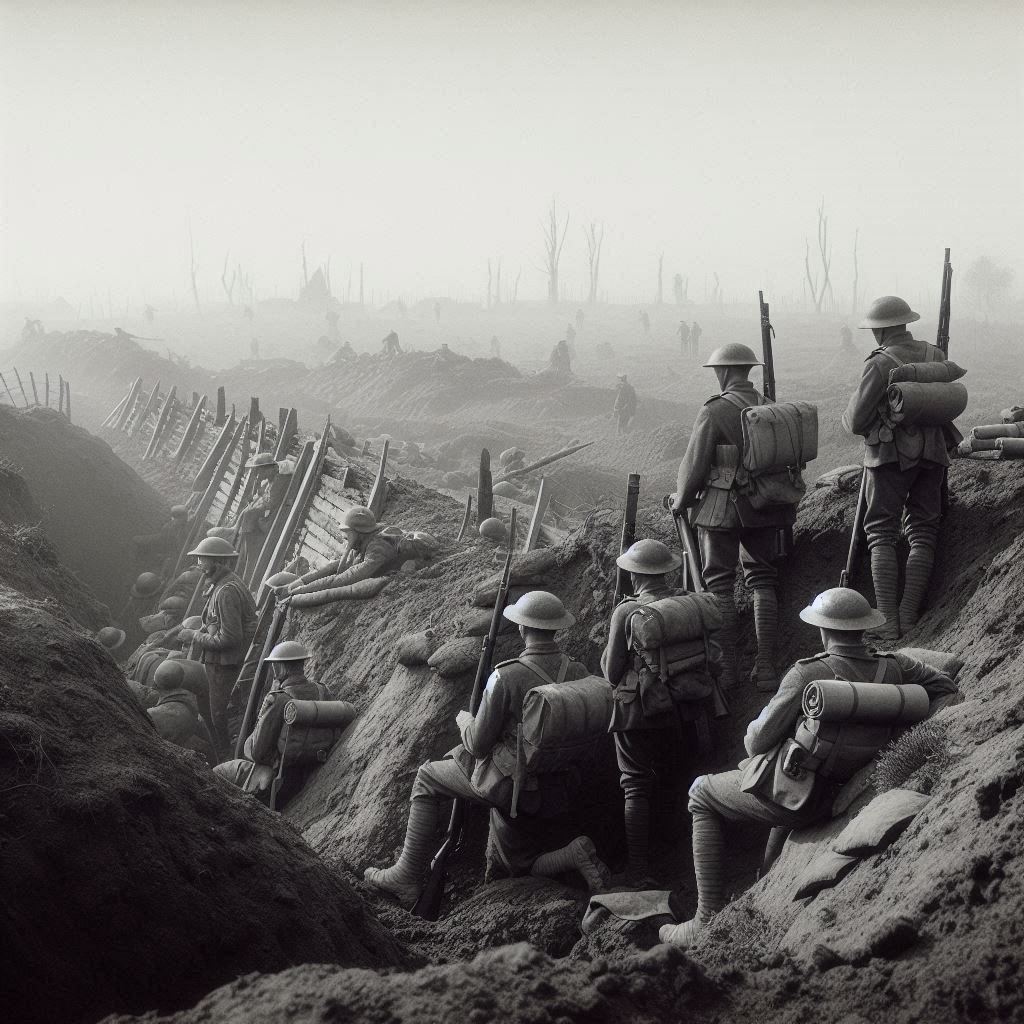
The clocks went back at the weekend. Suddenly, there are hints of winter in the air, as the last of the autumn leaves fall to the ground. It’s dark early and traveling around at night is all going to be more difficult until spring arrives. Like many people, I’ve been having a moan about this. I don’t like driving in the dark and I certainly don’t like driving of icy roads.
My complaints made me feel guilty as I started to learn about my ancestor, Henry Govans. My twenty-first century complaints and inconveniences pale into insignificance compared to what he had to endure in the Great War.
Henry was born in Crookedholm, my village, on 17 June 1892. He was the second son of the family, and they lived together at the romantic sounding Love’s Land. I’m sure the reality was anything but romantic. His father was Robert Govans, and like most of the Govans’ men, a coal miner. His wife was Isabella Strachan, born around the Kilwinning area.
Henry married Isabella Watt, a Kilmarnock girl, on 6 June 1913 in Kilmarnock. Together they had two children, Annie and Robert. Henry, at the time of his marriage, was a carter.
The outbreak of war sent this young family, like many others, in a direction they would never have believed. The unimaginable horrors of war were about to burst into their lives and change their future forever.
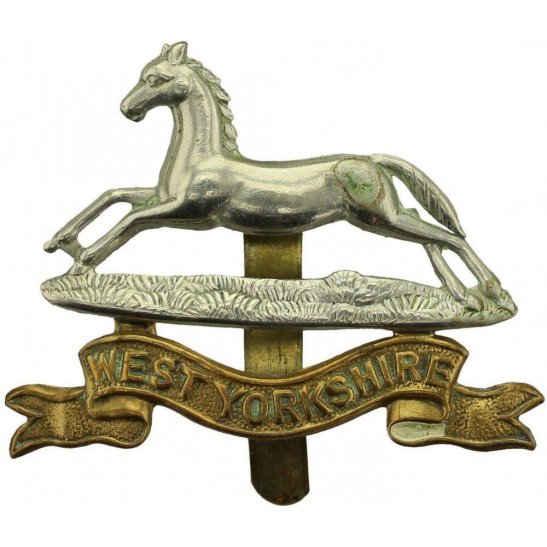
I’m picking up Henry’s war story in 1917. At this time, he was a private in the 1st Battalion West Yorkshire Regiment, (Prince of Wales’s Own). In November 1917, the weather was at its worst. Daylight was short. His battalion was on the Western Front near the town of Cambrai in northern France.
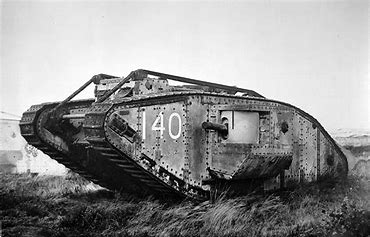
There had been a stalemate for some time on the front line. The Allied command had begun to think the German defenses were impenetrable. Finally two separate plans came together. The use of Mark 1 tanks had some success during the Battle of the Somme the previous year. This encouraged the British Commander in Chief, Sir Douglas Haig, to place an order for one thousand more.
The Mark IV tank hurriedly entered service in May 1917. It was to be the most prolific tank used in WWI and also the first tank to be mass produced. It carried a mixture of Lewis machine guns and a six-hundredweight gun that had a 100 degree arc of fire. Only the starboard gun fired straight ahead.
Alongside the tanks, a huge artillery bombardment of the German trenches was planned. Battalions of infantrymen would follow the tanks across No Man’s Land into the heat of the battle. The battle raged for seventeen days from 20 November 1917 until 7 December 1917. It was one of the first examples of massed tank warfare, combined with ground troops. Altogether, 378 combat tanks were used. Many were lost or broke down.
The artillery fire from both sides was intense. It is impossible to imagine the noise, the shouting, the machine gun fire and the roar of the tank engines. It is likely that the ground was soft at that time of year, making progress for Henry and his commrades even more grueling.
These were indeed, extreme conditions. Despite all of the obstacles in their way, the Allies had a successful first assault on 20 November, and broke through the Hindenburg Line. They advanced five miles into enemy territory. The 6th Division, which Henry’s battalion was a part of, captured the towns of Ribecourt and Marcoing from the Germans. Fighting alongside the British soldiers were troops from India, Newfoundland, France and USA.
The success of that first day was quickly reported back home. Church bells rang up and down the country. They celebrated this incredible breakthrough in the stalemate on the Western Front.
Not everyone would celebrate that day. The success had come at a huge cost. During the seventeen days of the battle, there were 75,681 casualties and 10,042 men killed on the Allies’ side. The Germans had 54,720 casualties and lost 8,817 men. These losses are difficult to comprehend.
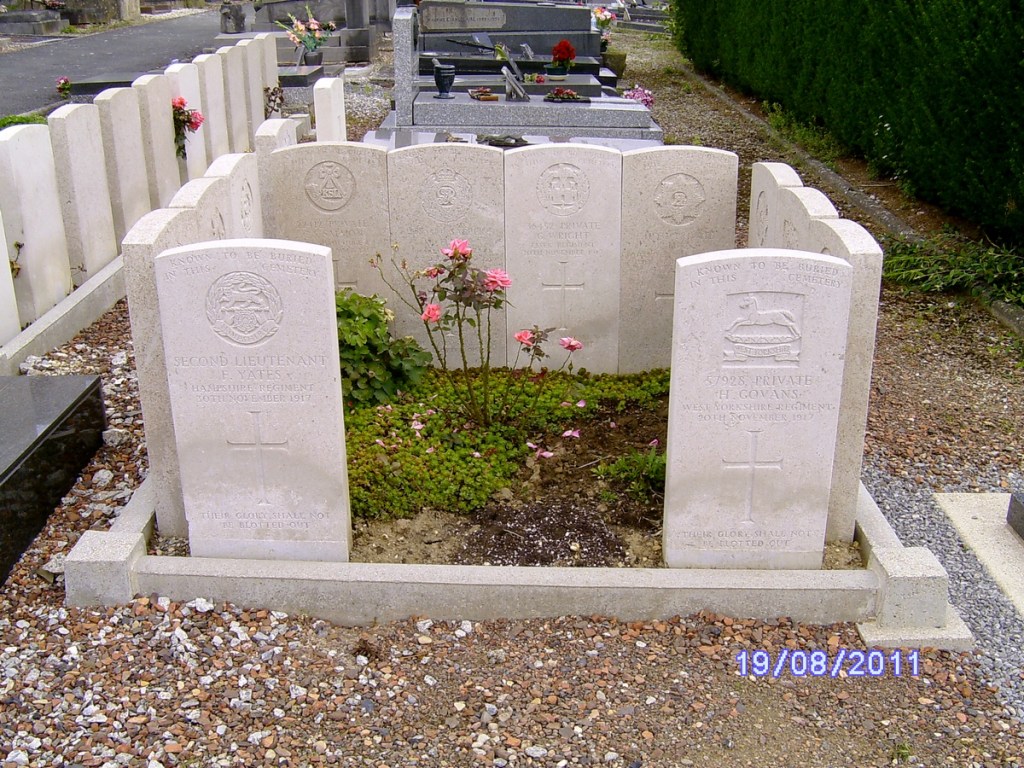
Henry, tragically, was one of those who lost his life. He was twenty-five-years-old. He was hit by the German artillery bombardment on the first day of the battle, 20 November 1917. A friend asked how I know this was how he died. A good question. Henry’s records only state that he was killed in action. However, on his gravestone in the Marcoing Communal Cemetry in Nord-Pas-de Calais in France, it states, ‘Known to be buried in this cemetery.’
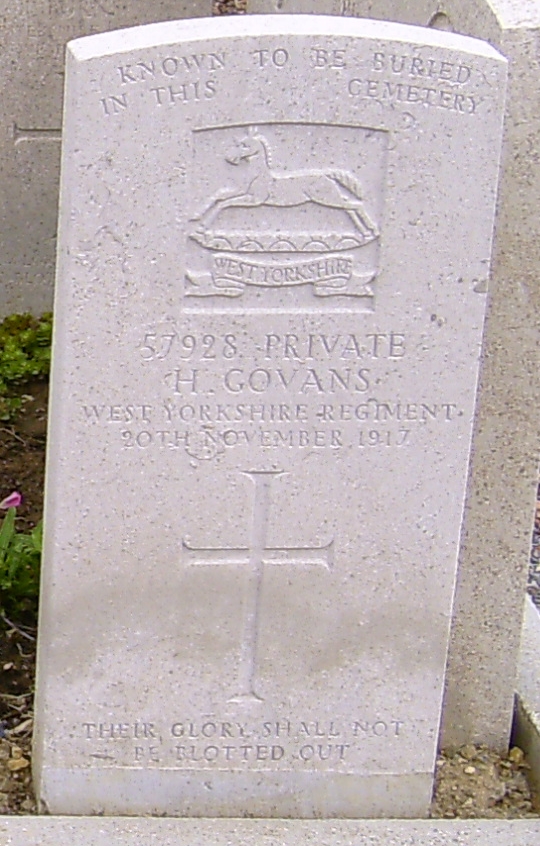
A little research explained that Henry will have been buried with others in a communal grave. There is no point going into details here, but there is no physical body at his gravestone.
Isabella and her two children, living at 2 Fulton Lane, Kilmarnock, would eventually get Henry’s medals. His two children, Annie and Robert received 25 shillings and 5 pence a week for six years. Henry’s death would be a bitter blow for his parents, Robert and Isabella. Word of their son’s death was not the first time great sadness had knocked at their door.
As it says on Henry’s gravestone, ‘Their Glory Shall Not Be Blotted Out.’
Discover more from Discovering My Family
Subscribe to get the latest posts sent to your email.

 Discovering My Family