What if you could travel back in time to meet a person from the past? Who would you choose? Robert Burns? Marie Antoinette? Florence Nightingale? There is so much written and recorded about these people. It is fairly easy to learn about their lives. What if you wanted to meet one of the millions of people that history has forgotten? I’m interested in the people who toiled every day to feed their family. I want to know how they lived even though, for the most part, they haven’t been remembered.
The difficulty in finding out about some of my ancestors quickly became obvious to me. I could easily find the occupations for my male ancestors. Finding out about women has been another matter entirely. I was aware that in nineteenth century Scotland, it wasn’t only the men who contributed financially to the running of the home. Women may not have been miners or blacksmiths like their husbands, bothers and fathers. But they did work. They did keep the home together. Isn’t this just as important as the work the men did? Shouldn’t their lives be recorded and celebrated too?
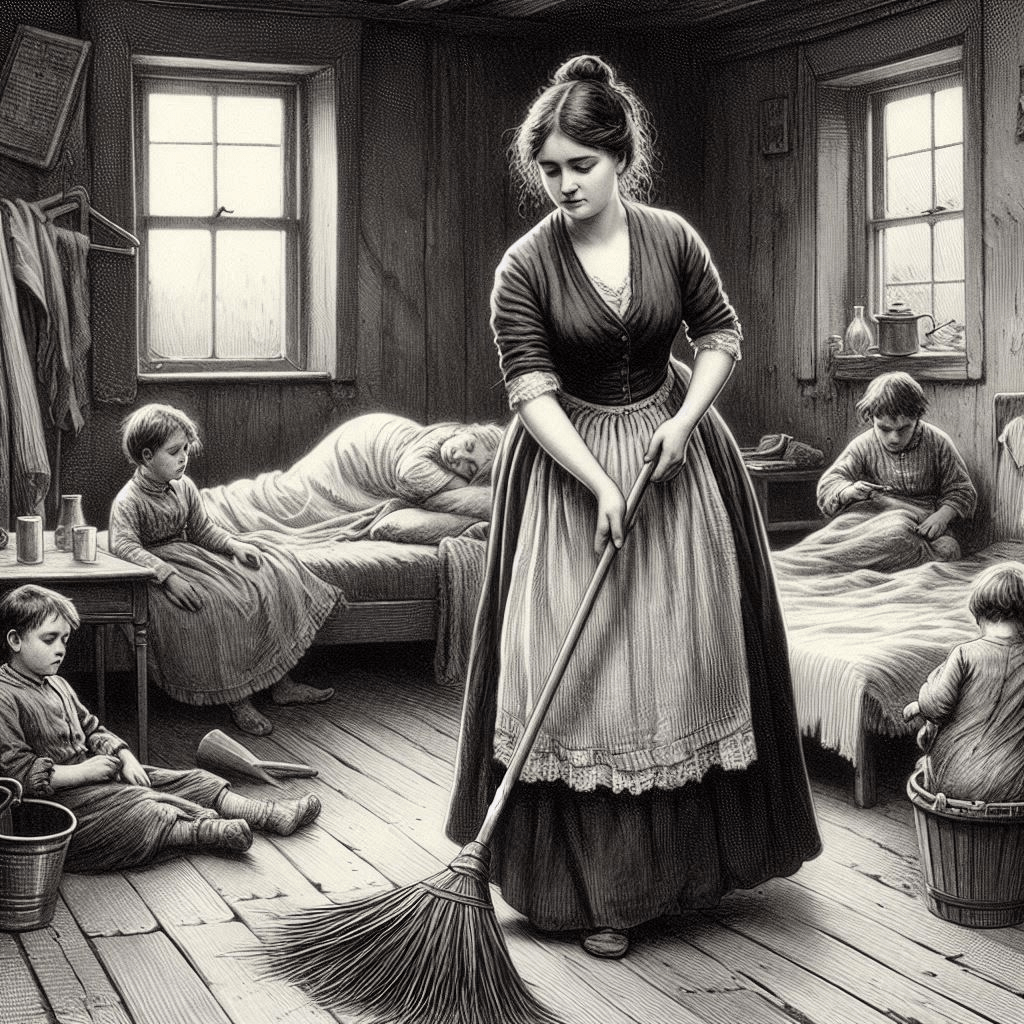
Lying hidden in census records a woman’s occupation is often recorded as ‘at home’. This is a catch-all phrase. What does it mean? What were women doing if on the census there is a blank space in the occupation column? I don’t think they were at home doing nothing.
In working class households in Scotland, in the second half of the nineteenth century, every penny counted. It was not unusual for a family of twelve to be living crowded into a two-roomed cottage or tenement. In 1888, children in Scotland finished their education at age fourteen. This change was put into law in 1883 to help improve the standard of education for each child.
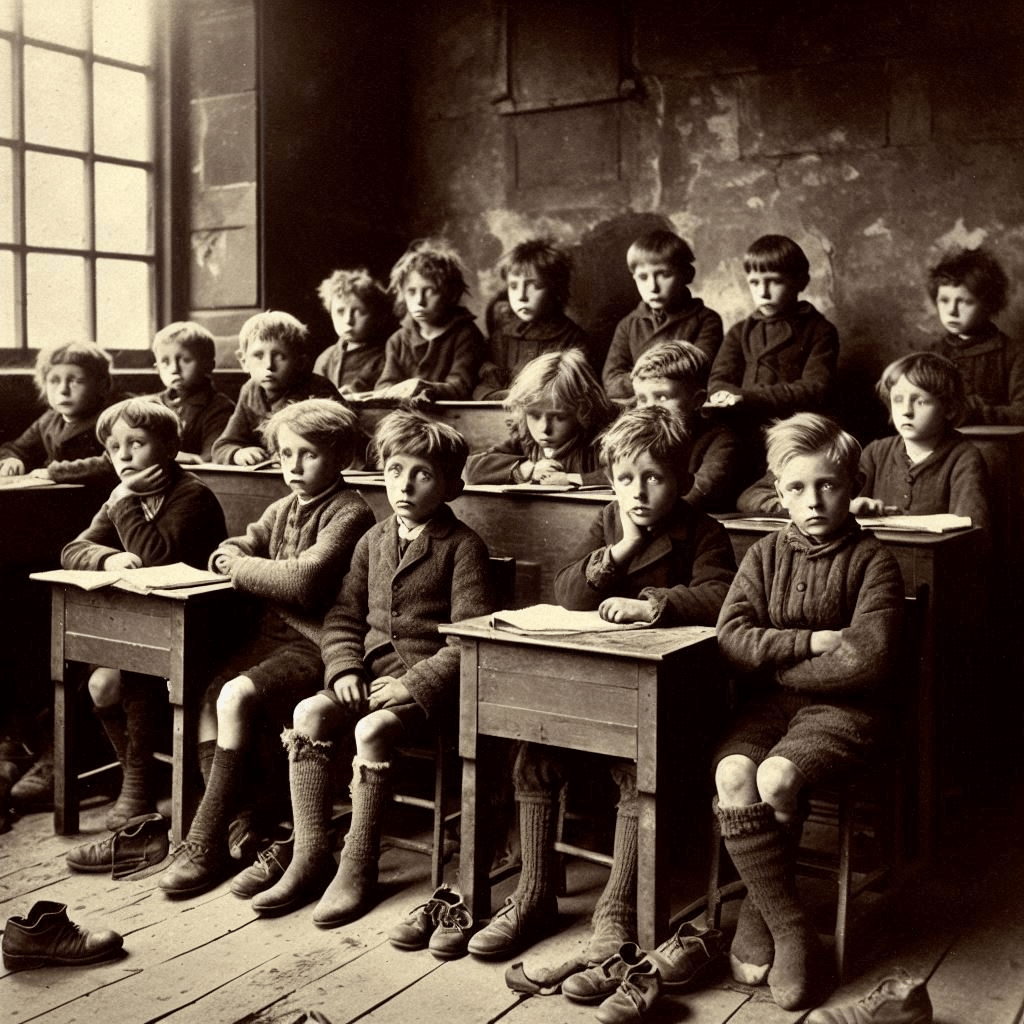
On leaving school, boys often started working in the pit alongside their father and elder brothers. Some found work as grocery assistants or in a textile mill. Some girls too would be boarded out to farms or big houses as servants. In larger towns, girls would also find work in mills. But for some girls, there is a blank space on the census. No clues are left to tell how they contributed to the household. Make no mistake, these invisible women were workers. They contributed to the economy of the family as much as any other member.
Agnes Livingstone Dickie, my two-times great grandfather’s eldest sister, was born in 1857 in Paisley. Her parents, Alexander and Elizabeth had met when they both worked at Curlinghall, a grand mansion in Largs, Ayrshire. Agnes would live in Paisley most of her life. She spent a few years as a child living in Rozelle Estate in Ayr. The family lived in the servants’ quarters while her father worked as a coachman.
There is almost nothing to learn about Agnes in any census from 1861 until 1901. She continued to live with her parents. Her siblings come and go from the records as they leave home and get married. There is no mention of Agnes leaving home to carry out any type of work. She never marries and she doesn’t have children.
Enumerators, who collected the data for each census, did not recognise working in the home as formal work. Women from that time, I’m sure, would give another opinion. Her mother must have relied on her eldest daughter throughout her ten pregnancies between 1855 – 1876. Elizabeth would need to rely on Agnes to cook, clean and look after her younger siblings. As Agnes grew up and left school in 1871, she would take on much of the work in the home. It must have been a great relief to her mother. She had eight children by that time and Agnes would help with many domestic duties.
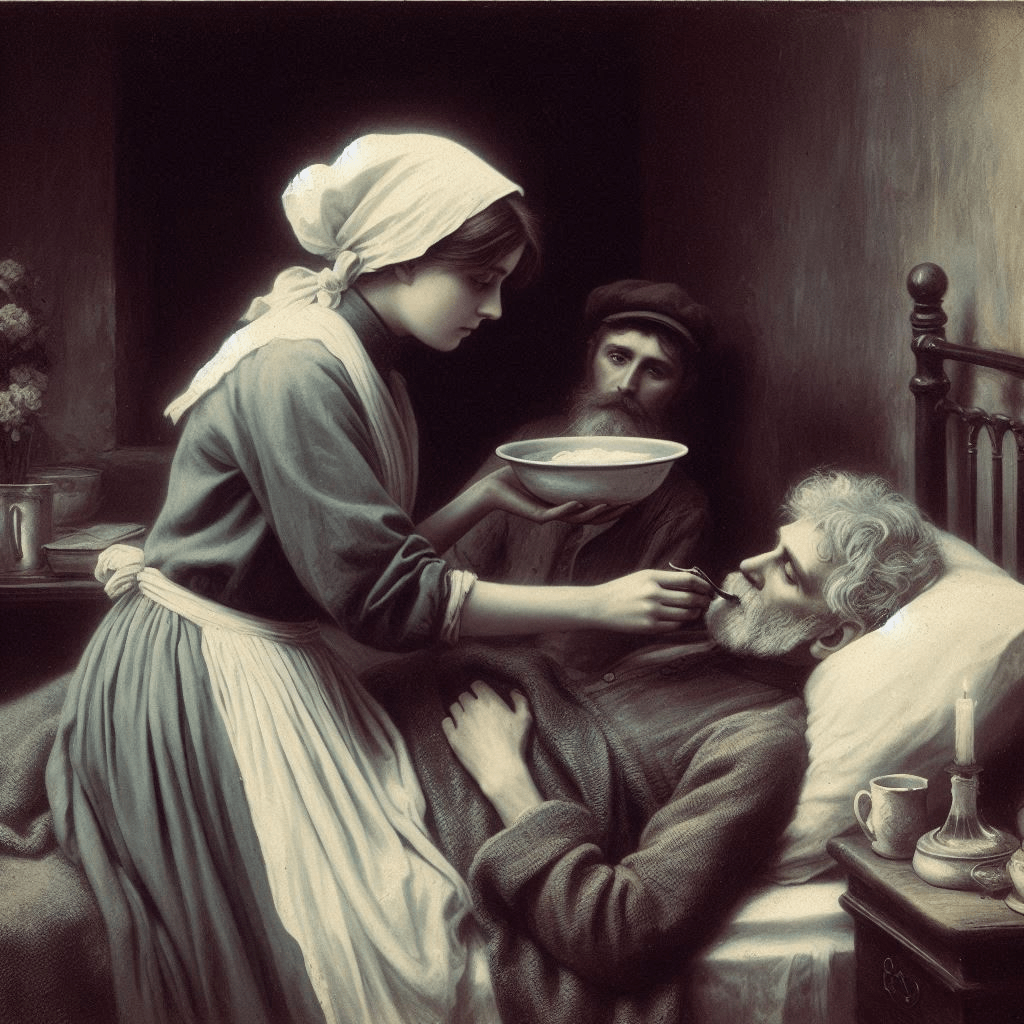
Agnes lived with her family until her death in 1902. She never married. Often a spinster aunt would provide support to other family members who lived nearby. Agnes may have been sent for when a sister or sister-in-law was in labour. Maybe she provided much needed childcare. When children were sick, maybe Agnes looked after them. Instead of being a hidden woman , Agnes was most likely the busiest woman in the extended family.
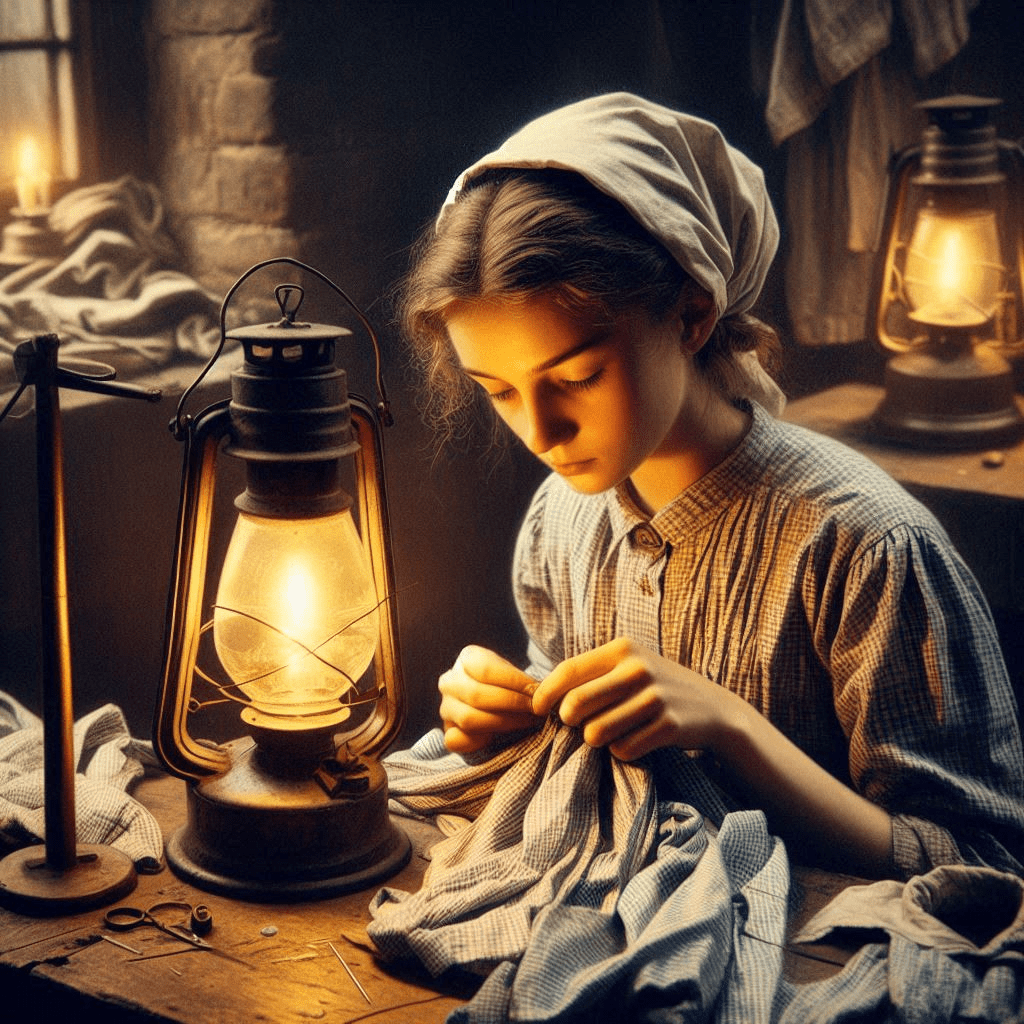
How else might Agnes have contributed to the family? Many women helped out by taking in work to do in the home. Laundry, sewing or other piecework was carried out to add to the family income. This work was overlooked at census time. Society, on the whole, didn’t value these important and often back-breaking tasks. Women kept everything together, allowing their men to go out and work.
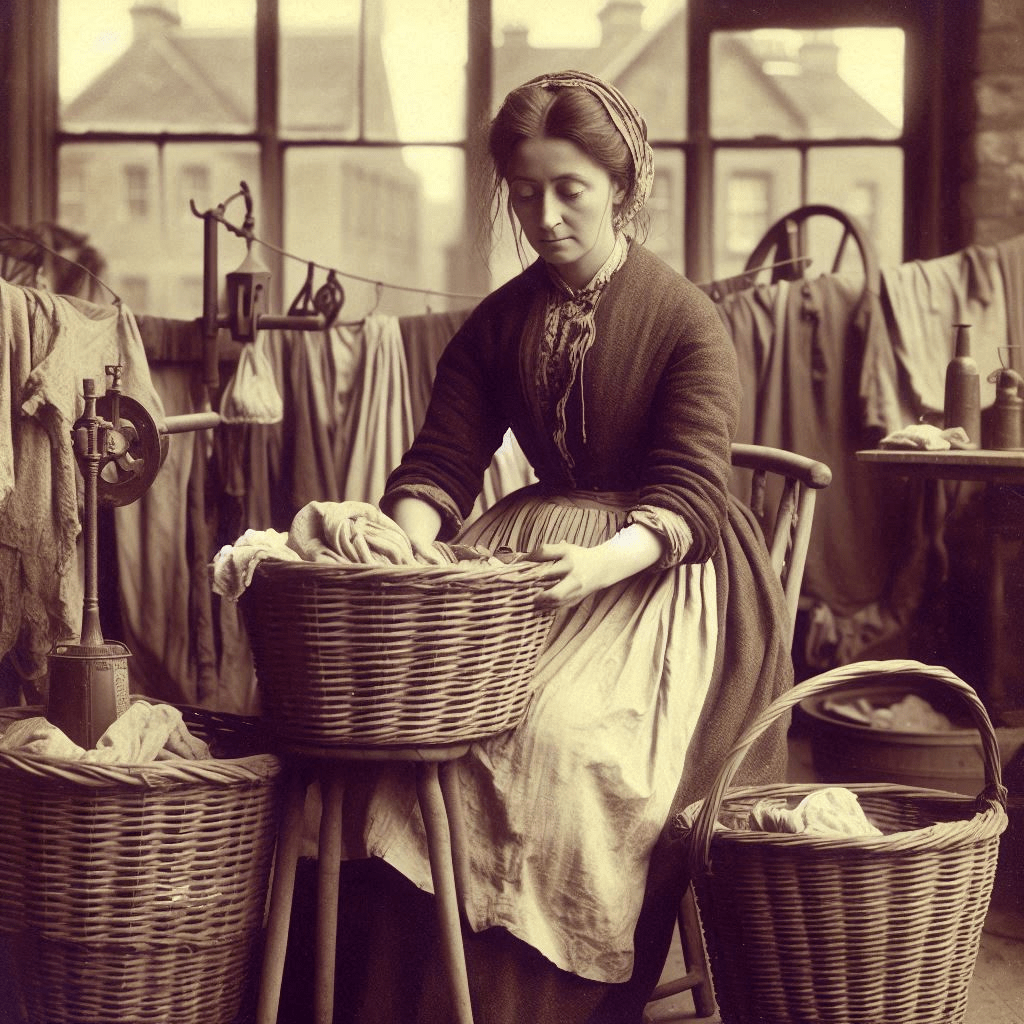
Piecework covers a great variety of tasks. Clothes were taken in to be mended. Sewing garments or knitting and weaving was common. Producing bed linens was often a home task. All of this work carried out at home involved long hours for low pay.
More skilled work like lace making and embroidery was done by many women. It would be wrong to think that piecework was only repetitive drudgery. Lace making was typical and needed precision and patience. Straw plaiting bonnets was common in some parts of Scotland. Some women made gloves. This was work that had to be exact and carefully sewn.
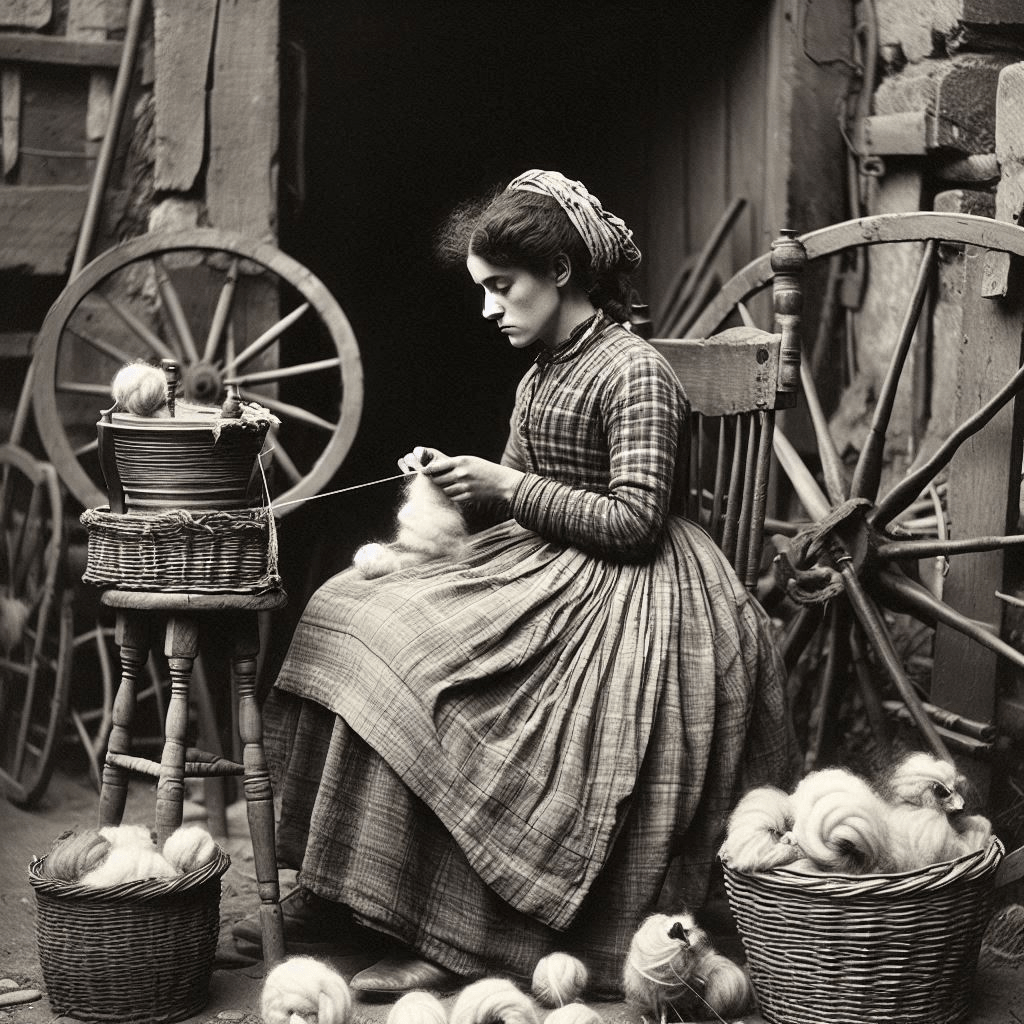
Much of the piecework came from factories. If Agnes carried out this type of work, she would be finishing off garments. She may have added details like feathers or lace.
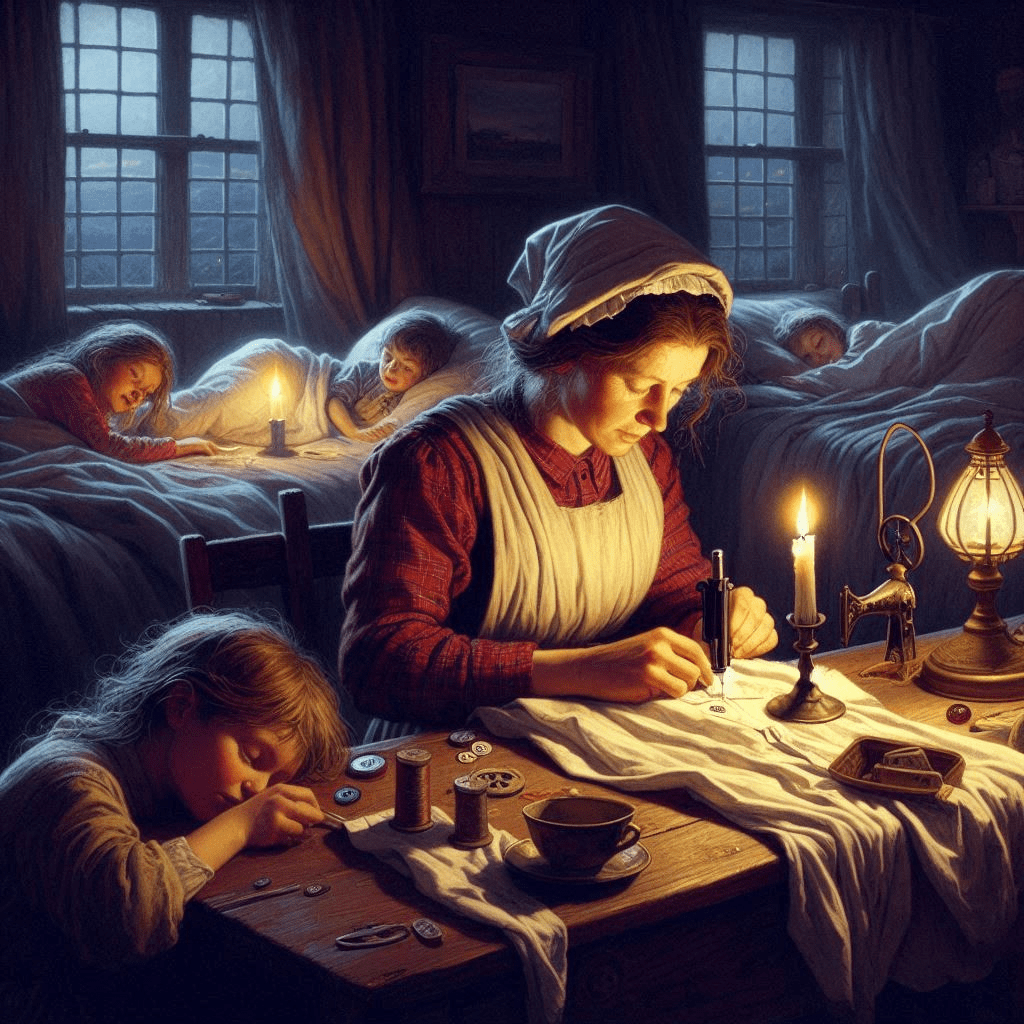
Working at home doing piecework was not easy. The hours were long and deadlines had to be met. Often women would work from early in the morning until late at night. Sometimes they would involve children in aspects of the task. They could wind wool, sort materials or rags and do simple sewing tasks. Pay was very low and paid by the ‘piece.’ Whatever was paid depended on the quantity and quality of the garments.
These tasks would be carried out in rooms already cramped with little light or fresh air. There was also no job security. Pay could suddenly be cut by the middlemen or factory owners. More could be demanded of women with no extra time allowed. The tasks were often very repetitive and must have caused aching hands and backs. A lack of bright light while sewing would be a strain on the eyes.
No doubt, reaching deadlines for piecework tasks would be no excuse for ignoring the daily work of the household. The weans still needed fed and the men needed hot water when they got home from the pit. It is fair to say that a woman’s work was never done.
As Agnes lived in Paisley, it is more than likely that she carried out piecework from the surrounding textile industry. Her brother James began work in a textile mill at age fourteen as a scourer. This was a vital part in the process of producing woolen goods. The raw wool would be cleaned in hot soapy water by the scourer. Dirt and grease would be removed in preparation for the wool to be carded, spun and woven.
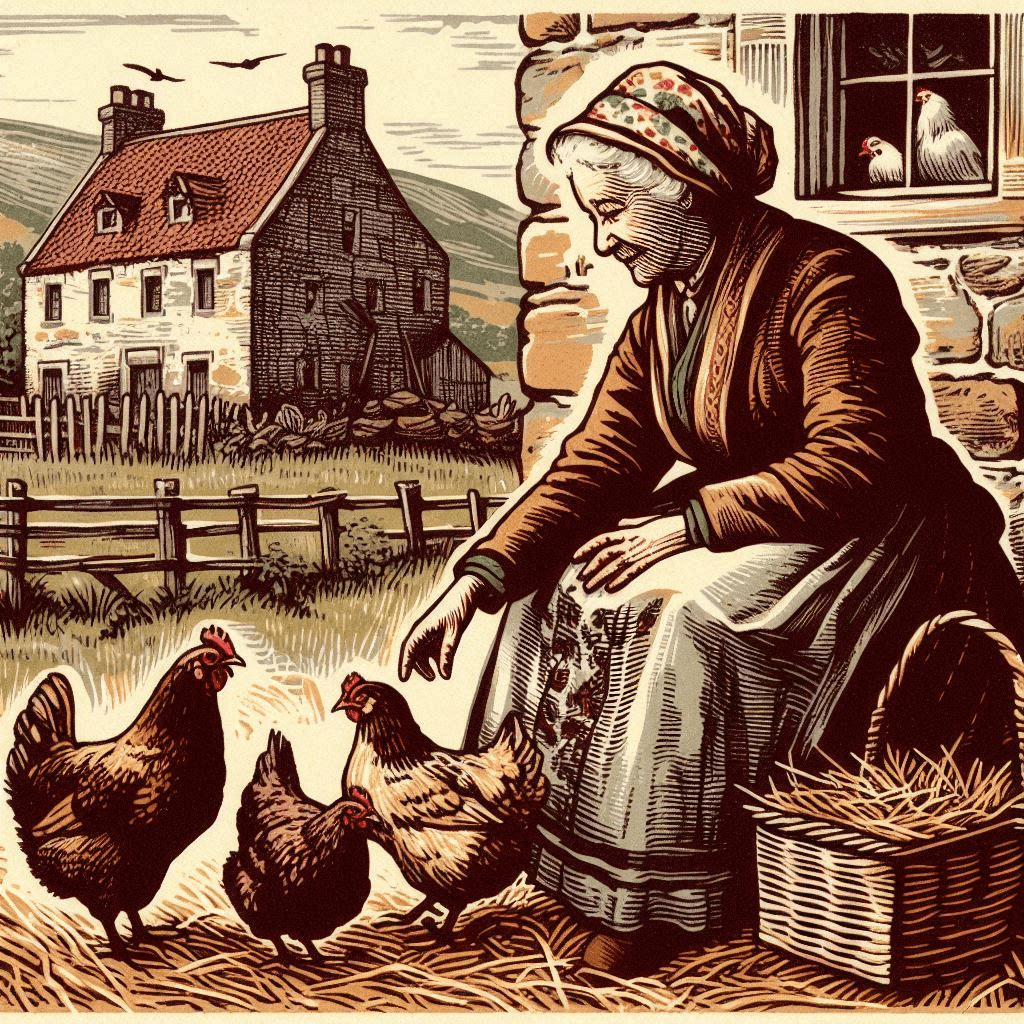
What else do I know about Agnes? Her father died at some point before 1891. His name doesn’t appear on an other census. Her mother is also listed as head of house and states that she kept poultry. No doubt this was a way to earn a few shillings for the household income. In 1891, Agnes is still living at 1 Union Street in Paisley. This is a home she shared with her mother for many years.
By 1901, Agnes, with her mother and brother John, moved to 7, Rosebury Place in Paisley. Her brother is a gardener, like his father before him. Sadly, Agnes didn’t survive for much longer. For two years she had suffered terrible pain from a spinal disease. No further details are given on her death certificate. At the beginning of the twentieth century, tuberculosis of the spine was a very prevolent disease. It is quite possible, given Agnes’s cramped and overcrowded living conditions, that she had contracted this bacterial infection.
Tuberculosis of the spine caused deformities and damage to the spine. There was no cure but bedrest was advised. Sometimes sufferers would have surgery to drain abseces. A few people would be sent to a sanitorium. Today it would be treated with antibiotics. It is likely Agnes suffered severe pain and weakness. She probably had night sweats, weight loss and would struggle with fatigue. A very sad way to end her days. Her mother survived Agnes by quite a few years. She died in in 1919 at eighty-four years from senile decay – old age.
A lot of what I have written is guesswork. It’s based on facts that are known about the late nineteenth century in Scotland. I hope I have come close to describing Agnes’s life. Many other women at that time would have lived similar existences. Who would I like to meet from the past? I’d love to meet Agnes of course, and tell her she hasn’t been forgotten.
Discover more from Discovering My Family
Subscribe to get the latest posts sent to your email.

 Discovering My Family