Family history research, if you are lucky, can reveal some surprising personal stories from forgotten family members. These moments, lurking in the depths of your family tree, can astound and amaze, making the hours trailing through records worthwhile.
Alexander Gavin was my great granny, Grace Govans’ cousin. This article is about his son, Frederick Charles Gavin MRCVS, DSO, was born on 19th February 1868 at Waterside, Dalmellington. His father was the manager of the Dalmellington Ironworks. Following a remarkable life, Frederick died at the age of eighty-two years in Kloof, KwaZulu Natal, South Africa, on 16th October 1950. His life story deserves to be remembered.
Frederick was educated at Ayr Academy, and it was from there he decided his future lay in veterinary medicine. He first moved to Kirkcudbright to become a student of Mr. T. Campbell FRCVS, who had been awarded this honorary title given to veterinarians who had demonstrated exceptional expertise and contributions to the field.
From this initial experience, Frederick travelled to London to take up his studies at the Royal Veterinary College, one of the oldest veterinary schools in the UK, graduating in May 1889. Frederic first practised at Burton-on-Trent, a market town in East Staffordshire, before moving to Drogheda, a town north of Dublin, in Ireland. Here he rose to become a veterinary inspector, at the Veterinary Department, Dublin Castle, which until 1922 was the seat of the British government in Ireland. Improving animal welfare and public health, was to become his life’s work.

On the outbreak of the Second Boer War (1899-1902), Frederick obtained permission to take leave of his post in Dublin, and joined up as an army veterinary surgeon, training at Aldershot in England, before accompanying a squad of the 8th Hussars and Mounted Infantry to South Africa.
Before their departure, on 26th December 1899, the 8th Hussars were at the Curragh, a flat open plain of almost five thousand acres of common land in County Kildare, Ireland, when orders were received. On 13th February 1900, the regiment embarked for Queenstown, now known as Komani, a town in the eastern Cape province of South Africa. On board the ship were nineteen officers, 586 Warrant Officers, Non-Commissioned Officers, and men. Most importantly for Frederick, 487 horses were on board too. During the voyage eleven horses and one crew member died. They arrived in South Africa on 10th March 1889.

Along with the 7th Dragoon Guards, and the 14th Hussars, the 8th Hussars formed the 4th Cavalry Brigade under Brigadier General Dickson. On 1st May 1900, the Boers made a stand in a strong position at Houtnek, where the forces of Sir Ian Hamilton, Lord Kitchener’s Chief of Staff, faced stiff competition. In a telegram of 2nd May 1900, the commander of the British forces in South Africa, Lord Roberts, said: “Hamilton speaks in high terms of the services of the 8th Hussars under Colonel Clowes and a made-up regiment of Lancers, which came into Broadwood’s brigade and assisted in making the Boers evacuate their position”.

The 8th Hussars marched from Machadodorp to Heidelberg with the 14th Hussars, and M Battery, under the command of Colonel Mahon. On 13th October 1890, Mahon “became heavily engaged near Geluk with a body of 1100 men with four guns.” Mahon succeeded in holding his position, when the Boers were driven back in a south-easterly direction, having sustained some losses.
The 8th Hussars lost two officers, Lieutenants P.A.T. Jones, and F.H. Wylam, along with seven men, while two officers, and eight men were wounded. Eight officers and eight non-commissioned officers were mentioned in Lord Roberts’ final despatches of 2nd April and 4th September 1901. In the first three months of 1901, the 8th Hussars were in the column of Colonel E C Knox, at one point advancing to the Swazi border.
During the later phases of the war, the Eastern Transvaal to the borders of Zululand, were the principal scenes of the regiment’s operations. One officer and one non-commissioned officer were mentioned by Lord Kitchener during the war, and in the final despatch, the names of four officers, two non-commissioned officers, and one private, were added. Colonel Mahon, of the 8th Hussar, was celebrated for his conduct of the Mafeking Relief column. The regiment had fifty-four soldiers killed in the war.
For his services in the Boer War, Frederick Gavin received both the Queen and King’s medals, with five bars, signifying that he had participated in five distinct military actions: the battles at Johannesburg, Diamond Hill, Belfast, Orange Free State and Cape Colony.
During his time fighting in the Boer War, South Africa got into Gavin’s blood, so much so, it become his home. He was appointed to the position of Manager of the Sanitary Department in Johannesburg in 1902, and was responsible for the improvement of animal welfare, with the opening of a public abattoir and a livestock market. Before this, sales of animals “were conducted from railway trucks in an atmosphere of dust accompanied by brutal handling, including non-provision of drinking water for long periods. Regarding arrangements for slaughter stock, there were several private “Slaughter Poles” scattered over a wide area, a most unsatisfactory state of affairs.”

Frederick was very well respected, and due to his business methods and professional skills, his duties were extended to overseeing municipal animal transport. From 1911, he took over as Municipal Veterinary Surgeon in Johannesburg, and his title changed to Manager, Transport and Cleansing Department, and Municipal Veterinary Surgeon.
On the outbreak of the Great War in 1914, Frederick joined the Army Veterinary Corps as Captain, and after doing duty at Aldershot, Basingstoke, and Winchester, he was appointed to ADVS 38th Division, with the rank of temporary Major.
In 1903 the Army Veterinary Corps had been created from NCOs, and men employed in veterinary duties, and in 1906 it combined with the Army Veterinary Department that had comprised the officers. At the outbreak of World War One there were 364 AVC officers, Regular and Reserve, and during the war a further 1,306 were commissioned. In addition to officers, the expansion of Other Ranks rose from 934 to 41,755. During the Great War, the AVC handled 2.5 million equine admissions, 80% of the injured animals admitted were treated and returned to active service.
A 1914 recruitment notice stated, “Men who have been accustomed to horses and are able to ride are required. Ages 40 to 47 years. Standards of height and chest measurement to be waived provided the men are organically sound.” AVC men were usually a little older than average, and during the war, were recruited from allied trades in the civilian world, such as stud farms and racecourses.

During World War I, Frederick saw active service in Belgium and France as a Major in the SAVC and was awarded the DSO. He proceeded to France with his Division, remaining with it until after the cessation of hostilities. Gavin was mentioned twice in despatches, receiving the 1914-15 Star, Victory, and King’s medals, and retired with the rank of Major.
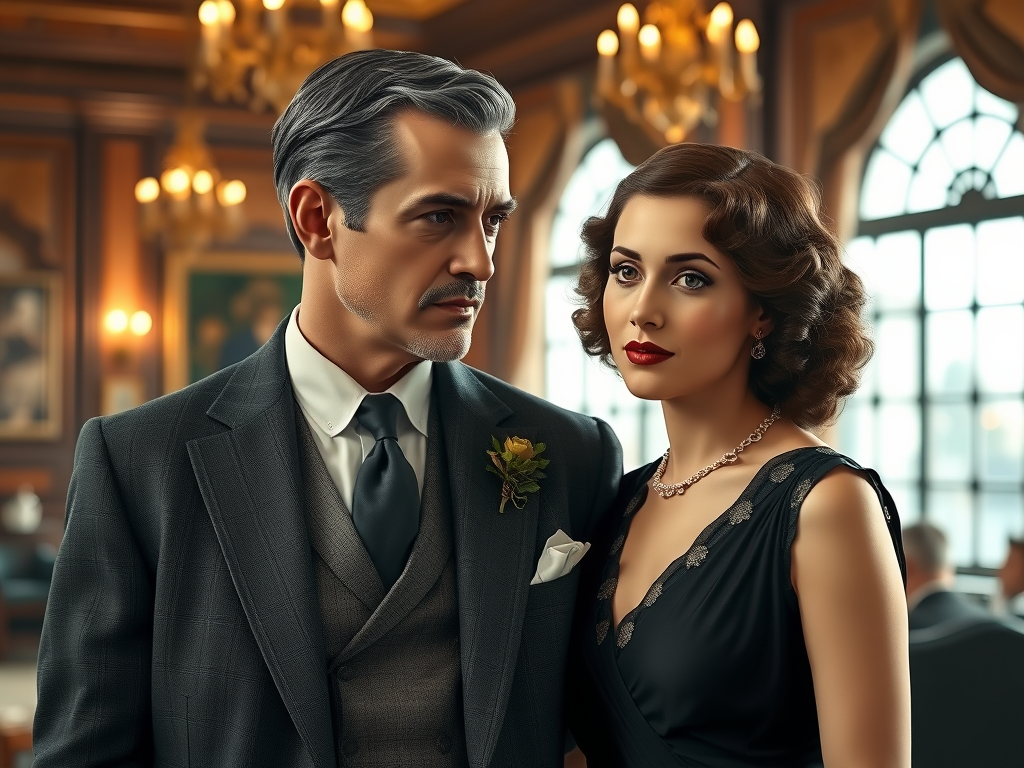
After the Great War, Frederick returned to South Africa, and in 1919 resumed his duties with the Johannesburg Municipality. He was a member of the Rand Club in 1920. Founded in 1887, by Cecil Rhodes himself, the Rand Club is in the centre of Johannesburg. It would have been around this time that Frederick met and married Clothilde. She was born in 1893, making her twenty-five years younger than Frederick. Together they travelled to London, perhaps on honeymoon, and stayed with his brother, Alfred, in Berkeley Square, London. The couple left from Glasgow, possibly after visiting other family members in Scotland, on 4th November 1922, and sailed for Cape Town on the ‘Ulysses’ of the Blue Funnel line. They travelled first class, and at this time, Frederick was fifty-four years old, and Clothilde, his wife, was twenty-nine-year-old.
Frederick never lost his links with his home in Ayrshire, Scotland, and was friends with the McAdam family of Craigengillon Estate, near his home in Dalmellington. The McAdam family were well known for their horse breading, and even sent forty horses in 1899 to South Africa, to support the Boer War. Frederick took charge of the horses on their long journey.
On reaching the age limit of sixty-years-old, Frederick was presented with a testimonial bearing the Common Seal of the Johannesburg Council. It was said that Frederick Gavin was possessed of an organisational ability and business acumen so characteristic of the Scot. Frederick retired to Swaziland to farm, and later settled in Kloof, a leafy upper-class suburb, and small town, in the greater Durban area of KwaZulu Natal. On the death of Mr E Wilson on 6th June 1932, Frederick succeeded him as Veterinarian to the Johannesburg Turf Club. He also took over the Johnston’s Veterinary Vaccine Agency in 1929.
After a long and full life, Frederick died on 16th October 1950 in Kloof, Natal. Clothilde, lived on for another 14 years, dying on 28th November 1964. They did not have any children.
Quite an amazing life for a man whose grandfather was a miner from Ayrshire.
NB – the pictures are a bit of fun to help illustrate the story but are in no way accurate.
Discover more from Discovering My Family
Subscribe to get the latest posts sent to your email.

 Discovering My Family